Thursday, May 23, 2013

Galaxies by Nandita Subbiah 5/24/13


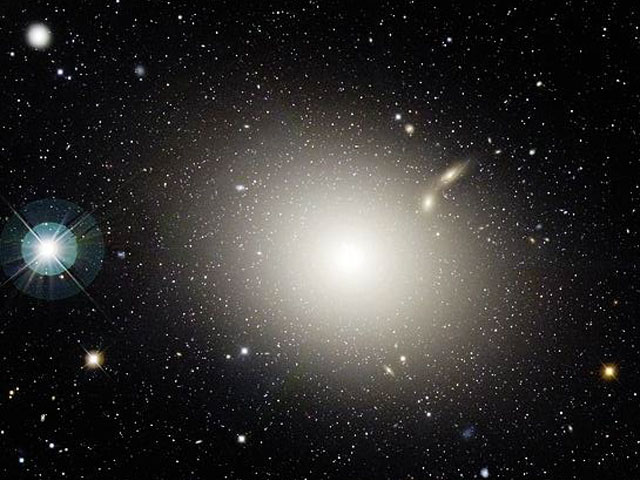
A galaxy is a system of billions of stars, along with gas and dust that is held together by gravity. There are three types of galaxies: spiral, elliptical and irregular. Each of these types of galaxies are formed differently. Spiral galaxies are formed when a protogalactic cloud collapses (a protogalactic cloud is a denser area of gas, that originally expanded with the rest of universe, but then stopped.) The momentum of the protogalactic cloud will cause it to spin, creating a spiral galaxy. Spiral galaxies have three parts: a rotating disk, a bulge and a halo. Our galaxy, the Milky Way galaxy, is an example of a spiral galaxy. Elliptical galaxies form when two spiral galaxies merge. It is unclear whether all irregular galaxies form the same way. Right now, scientists believe that irregular galaxies start as either a spiral or elliptical galaxy. They then turn into irregular galaxies through gravitational interactions and merging with other galaxies.


Galaxies are arranged in clusters in the universe. These clusters are held together by gravity. Rich clusters are clusters that contain more than 1,000 galaxies. Poor clusters are clusters that contain less than 1,000 galaxies. The Milky Way and Andromeda galaxies are part of a poor cluster called the Local Group.

Picture of the Earth in the Solar System, Solar Interstellar Neighborhood, Milky Way Galaxy, Local Galactic Group, Virgo Supercluster, Local Supercluster and Observable Universe.


Map of the clusters.


Sometimes, galaxies that are near each other will collide. This process take hundreds of millions of years. This creates new galaxies. Galaxy collisions are very common, because galaxies tend to be relatively close to each other. Stars rarely collide because they are spaced further apart. Because the process takes such a long time, scientists use computer simulations to simulate what would happen when two galaxies collide. They are predicting that about four billion years from now, the Milky Way galaxy will collide with the Andromeda galaxy.

Prediction of how it will look when the Milky Way and Andromeda galaxies collide.
(Source:http://www.nasa.gov/mission_pages/hubble/science/milky-way-collide.html)


The Milky Way galaxy is about 100,000 light years in diameter. Our solar system’s location in the Milky Way is estimated to be 28,000 light years away or ⅔ of the way to the edge of the galaxy away from the center. It is about 20 light years above the Milky Way galaxy’s equatorial plane in the Orion spiral arm.

Our solar system’s position in the Milky Way galaxy

At the center of the Milky Way galaxy, the stars become tightly packed together. About 10 million stars orbit within 1 light year. This is called the galactic bulge. Most parts of the Milky Way aren’t crowded. The closest star to the Sun is 4.2 light years away. An interesting fact is that the Sun and our solar system is actually orbiting around the center of the galaxy. The solar system is moving at an average velocity of 828,000 km/hr. It takes the solar system 230 million years to complete its’ orbit around the center of the Milky Way.


Solar System by Evan Chinman


Solar System
By: Evan Chinman
Purple


The Place where you live is home, zoom out a bit. You live in the united states. Zoom out We all live on earth. And then one more time, we are at the solar system. As you can see above, our solar system consists now of 8 planets  and the sun. Our system hasn't always looked like this. It started with a nebula. A nebula is a mix of gases that eventually will start condensing together due to gravity.    
Nebulas are very pretty. Nebulas are a mix of gases and dust. Our nebula that created our solar system contained nitrogen, oxygen  iron, silica, and all the other elements needed to build a world like ours. Then gravity kicks in. Gravity started to pull all of these elements together. Vast swirls of dust formed in space. In one of these massive spirals  a rocky planet now know as earth began forming. Built by stardust  and formed by gravity.

Fast forward 100 million years. Our earth now is one massive ball of rock sucking in tons of star debris  Our earth would have remained like this, tons of rock, metals, and minerals if it were not for one more thing. Forming in the center of the nebula great amounts of heat and pressure have built up. These factors  bonded  hydrogen gases to bond together and fuse. Our star the sun was coming to life. As the sun came to life it gave a huge blast of solar wind, extreme radiation was released from the sun. Blowing away all the remaining debris, dust and gases left in the nebula. That is how our solar system came to be.


In our solar system we have 2 types of planets. We have the inner planets, the ones closer to the sun, and the other planets, the ones farther away from the sun. Some similarities the inner and outer planets share are, The both have a spherical shape, but not perfect. They all orbit the sun. They all have some type of atmosphere  They all have matter and gravity. Some difference they have are The outer ones are all gas giants, while the inners are solid. The inners are smaller. The outers are cooler than the inners. Lastly the inner planets are in the asteroid belt.


Mercury

The surface of mercury can reach up to 800 degrees fahrenheit  This is due to how close it is to the sun, and how slow it rotates. It also can go down to -280 degrees fahrenheit  A second fact of mercury is that the surface has many craters in it. These have probably formed by debris in space hitting the planet. One side of mercury seems to be more hit than the other.


Venus


Venus is known as the sister planet to earth, the size of venus is just 5% smaller than earth. Venus is the brightest thing in the sky beside the moon and the sun. Venus is the second planet from the sun. Venus also has a metallic core and has a crust and mantle.


Earth


Earth is the largest inner planet, and so far the only planet to have life, and liquid water found at our surface. Earth atmosphere is comprised of mostly nitrogen, and oxygen  The atmosphere in the past years has been effected by green houses gases. This has caused ozone holes, acid rain, and global warming.

Mars

Mars reddish color comes from the rust or iron oxide that is on the soil on mars. Mars shows signs of river beds, and that water used flow in the surface. Mars atmosphere is much thinner than earths but they do have some common features. They nearly have the same day length. A day in mars is 24 hrs 37 mins.

Jupiter

Jupiter is known for how big it is and the giant swirl on the planet. Jupiter is the biggest planet in our solar system. Jupiter is about 318 times larger than earth. If you added up all the planets in our solar system jupiter is still 2.5 times larger than all the others combined! The giant swirl, also known as the giant red spot. That spot is actually a storm. This storm has been going on for more than 400 years long. 

Saturn

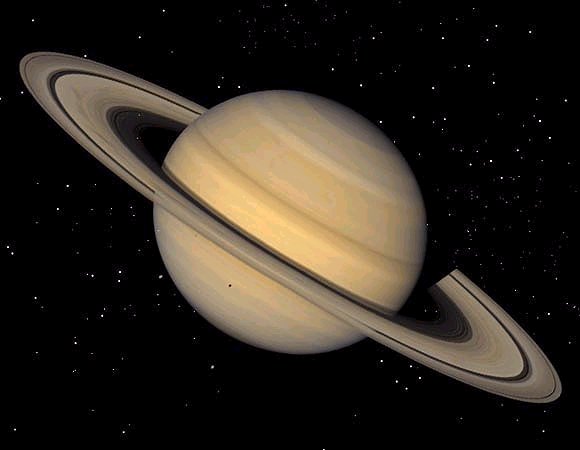
A lot astronomers will say that saturn is one of their favorite planets. This planet has a very large ring around it. These rings can be seen from a typical star telescope. Besides saturns rings it holds many other features. Saturn like earth has auroras. Saturn has a very harsh atmosphere, that contains high amounts of sulfur in it. Saturn's moon titan has water on it too.

Uranus

Uranus has an atmosphere that is mostly composed of methane. The Methane is what cause the blue color of the planet. As you probably know methane is very flammable, but the temperature of uranus is so cold you couldn't light a match there. Most don't know this but uranus has a faint ring system. It also has 27 moons.

Neptune

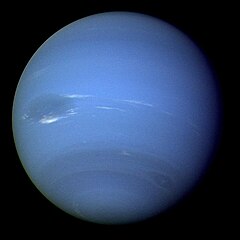
Like uranus, neptune's blue shade comes from the amount of methane. Neptunes has a "great dark spot" like how jupiter has a "great red spot". Astronomers believe that it is a hole in the atmosphere like how we had an ozone hole. Neptune Has 19 known moons so far. It is also the farthest away planet from the sun.

For more fun info on the planets view this great video https://www.youtube.com/watch?v=nQfJ7j2UGGk

The inner planets or the more dense ones move faster because they are closer to the sun, meaning the sun will have more force on it making it revolve around it faster. They move faster just like how a comet will. The sun will pull more at it. View this link to see how the speed increases as you orbit close to the sun. 

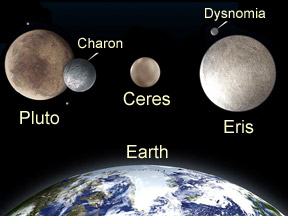
A dwarf planet is defined as 1. Orbiting the sun. 2. Nearly rounded shape. Big enough to use its own gravity to shape it together into a sphere. 3. The neighborhood is not fully cleared. Meaning that other objects are still in the way of the orbital path of this object. 4. It cannot be a moon, pretty straightforward. 3 dwarf planets in our solar system are Eris, ceres, and Pluto.

The definition of a planet is a lot like the definition of a dwarf planet. It must orbit the sun. As would a dwarf planets. Again in must have a roundish shape, so far like a dwarf planet. The catch is that a planet must have a fully cleared neighborhood. People are still debating the definition because some of the gas giants don't have a fully cleared path. 
     

Wednesday, May 22, 2013

Space Exploration 2 by Emily Tully


For years, we have been sending spacecrafts out into the solar system to where humans themselves can’t go in order to expand our knowledge of the universe we live in. These have allowed us to do what is not possible from Earth. The following paragraphs will explain just a few of the missions to Neptune, Pluto, the Kuiper Belt, the dwarf planet Ceres, and the Sun.

In 1989, the Voyager 2 flew by Neptune. It was the first and only man-made object to have flown by this faraway planet. This spacecraft was less than 5,000 km above the planet’s cloud tops at its closest approach. During its mission, the Voyager 2 discovered five moons and four rings. Neptune’s largest moon, Triton, was found to be the coldest known planetary body in our solar system. The moon is so cold that a nitrogen ice “volcano” can be found on its surface. Another discovery was a “Great Dark Spot.” However, this spot vanished by the time the Hubble Space Telescope imaged the planet five years later. Also, Neptune has the strongest winds in the solar system. Even with all these discoveries, this ever-changing distant planet is still a mystery to us. 

              
This is an image taken by the Voyager 2 of Neptune.     This is an image of the Voyager 2
http://solarsystem.nasa.gov/planets/profile.cfm?Object=Neptune     http://science.nasa.gov/science-news/science-at-nasa/2004/13jul_solarblast/


Currently, the spacecraft New Horizons is expected to fly over Pluto in July, 2015. It will be the first spacecraft to reach the dwarf planet. It will study the icy planet itself as well as its moon Charon. During the 150 day flyby, New Horizons will be moving at a speed of 14 km/s. It will be within 9,650 km of the center of Pluto’s mass at its closest approach. Launched in 2006, this spacecraft has seven scientific instruments that can record the atmosphere, surface, interior, and intriguing environment of Pluto.

This is an animation of the spacecraft New Horizons
http://solarsystem.nasa.gov/missions/profile.cfm?Target=Dwarf&MCode=PKB


The New Horizons spacecraft is traversing many parts of our solar system. It has already passed by Jupiter, it will pass by pluto as mentioned above, and will explore the Kuiper Belt. New Horizons is prepared to make the first the first close-up study of the Kuiper Belt. For its final phase of the spacecraft’s journey, it will travel through the Kuiper Belt in search of icy comets, and objects that may be the original source of water in our solar system. This is the first time the Kuiper belt will have been explored by humans. The faraway world is a great mystery to us, and this mission will give us insight on the vast space.


This is the New Horizons spacecraft


Aside from Pluto, other dwarf planets are being investigated as well. One example of this is the dwarf planet Ceres. This dwarf planet is being studied by the spacecraft Dawn. Dawn launched in 2007 and plans to reach Ceres in 2015. During its mission, Dawn will investigate Ceres’ internal structure, density, and homogeneity by measuring its mass, shape, volume, and spin state using radiometric tracking and imagery, and determine elemental and mineral composition. Ceres is the closest dwarf planet in the solar system to us. It is located in the asteroid belt where Dawn is now headed.


This is the spacecraft Dawn


Many spacecrafts are in space studying the sun, including SOHO. SOHO was launched in 1995. While its primary mission ended in 1997, scientists are still using the satellite, and other tools. SOHO uses 12 important tools to study the internal area of the sun, its outer atmosphere, and the origin of the solar wind. This spacecraft has been used by scientists to find valuable information about the sun.  Discoveries like tornadoes on the Sun’s surface can be credited to SOHO.
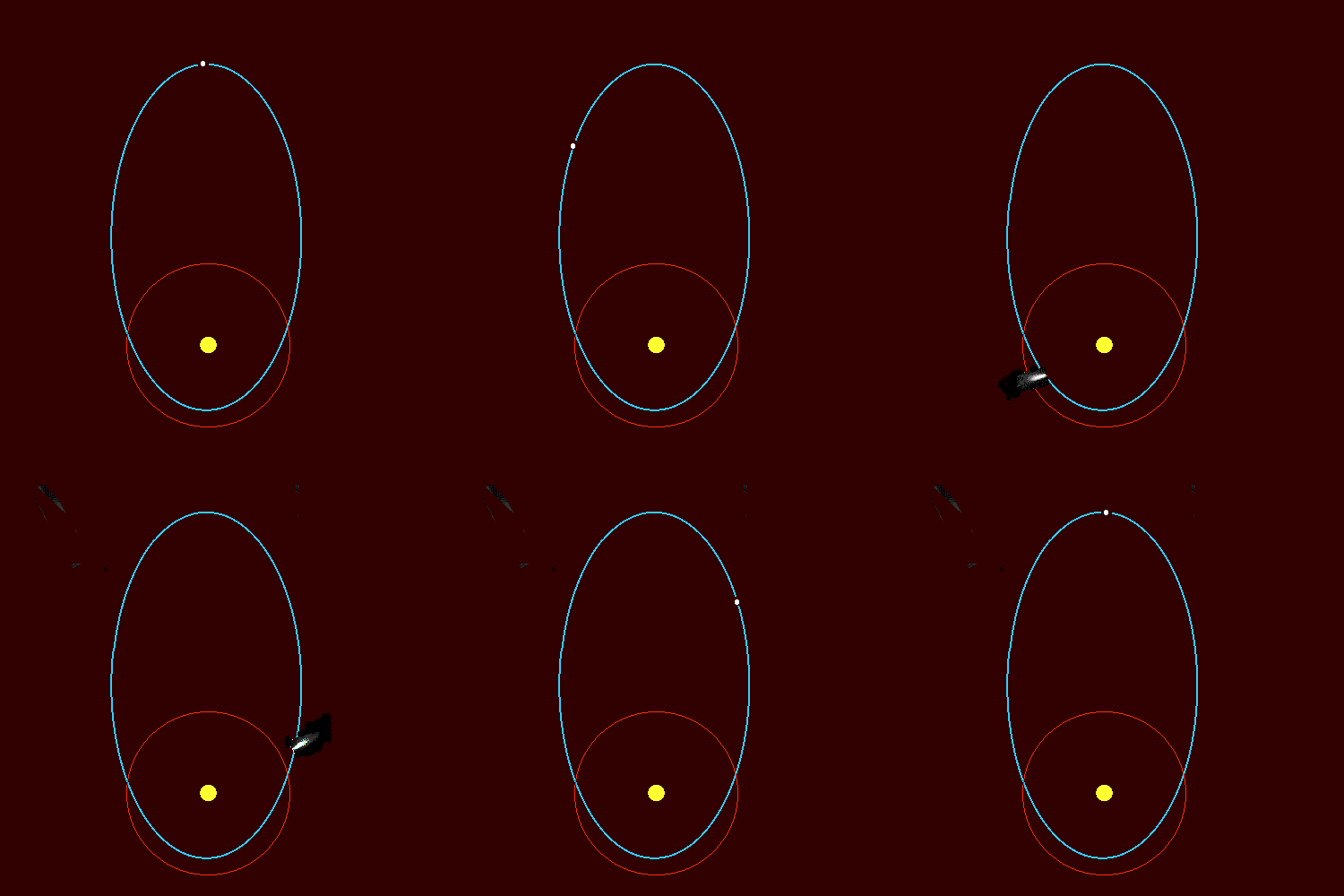
SOHO has a unique orbit. It is positioned ahead of the Earth so that it always has an uninterrupted view of the sun. The combined gravity of the Sun and the Earth keep SOHO locked between them. It is the first sun observatory to always see the sun with no objects in the way. This makes it very useful. It was able to see the far side of the sun where the spacecraft could detect solar activity days before it reached the Earth.
Unfortunately, in 1998, scientists lost contact with SOHO for six weeks. Scientists worked very hard and were able to recover SOHO and its 12 scientific instruments, and the spacecraft was able to resume in its work.

This is the SOHO spacecraft


The Greenhouse effect and Global warming


The greenhouse effect like a greenhouse keeps things warm for us here on earth. The greenhouse effect works hand in hand with the suns radiation.  Without greenhouse gases the planet would be much colder. Greenhouse gases act like a blanket for earth, this blanket can be found in the layer of the atmosphere we call the troposphere. Greenhouse gases have kept the planet warm by trapping radiation from the earth for billions of years. The only thing is, greenhouse gases are very picky about which kind of radiation they will absorb.
The Greenhouse effect 
The whole process begins when the sun heats the earth.  To put it into more detail,  shortwave solar radiation passes through the atmosphere, this energy makes the atoms of the earth vibrate faster (heat up).  The earth then radiates long-wave radiation or infrared radiation back into space. This infrared radiation is what heats the atmosphere and some of it is trapped by the greenhouse gases.  After the greenhouse gases trap the infrared radiation it is re-radiated back to earth, warming the air. 


The following are all greenhouse gases in order from strongest to weakest. Notice how all of these gases contain three or more atoms.
  • Methane (CH4) is the strongest greenhouse gas because it has the most atoms. This is why it is the best at trapping radiation, it has more atoms to do so. Even though it is the strongest greenhouse gas it is one of the least abundant.
  • Carbon dioxide (CO2) is the second strongest and one of the most abundant greenhouse gases. It is the second strongest because it has the most mass, which helps it to trap heat more efficiently.
  • Nitrous oxide (NO2) Is the third strongest greenhouse gas because it only has three atoms and does not have as much mass as carbon dioxide. It is not as efficient as carbon dioxide and methane at trapping infrared radiation, but it is stronger than water vapor.
  • Water vapor (H2O) is the weakest because it is the lightest of the greenhouse gases. It often changes into liquid and solid form as well, so it is the least effective at trapping infrared radiation.

      A greenhouse gas needs to have three or more atoms. A greenhouse gas needs to be able to trap infrared radiation and release it as heat energy into the surrounding air. If it does not have three or more atoms and cannot trap infrared radiation it is not a greenhouse gas.
Graph representing ice core data
Ice cores drawn from Greenland, Antarctica, and tropical mountain glaciers show that the Earth’s climate is currently warming. The cause of this warming is greenhouse gas levels. The ice cores can show us the levels of greenhouse gases and how along with the temperature they have also increased very rapidly. Along with the ice cores evidence that the earth is warming can be seen in the sudden sea level rise, the warming of oceans, shrinking of ice sheets, declining Arctic sea ice, global temperature rise, humidity and the retreating of glaciers. Each of these show that the earth is in fact warming. The image above shows data taken from ice cores and how the earth’s climate has changed over the past thousands of years.


Carbon dioxide plays a big role in global warming because it is one of the strongest  and most abundant greenhouse gases.  The more carbon dioxide that is in our atmosphere the warmer it will be.  That is why as carbon dioxide levels in our atmosphere increase, so will the temperature.  On the graph below you can see that the blue line representing carbon dioxide is almost identical to the line that represents temperature. When the carbon dioxide levels increase, the temperature increases. Carbon dioxide traps infrared radiation that is reflected from the earth and releases it as heat into the atmosphere. Since carbon dioxide is the  most common greenhouse gas in the atmosphere temperatures will rise. This means that if carbon dioxide levels in our atmosphere continue to increase, temperatures around the world will continue to increase as well, creating what we call global warming.


Methane is another greenhouse gas that plays a big role in global warming. Methane is the strongest greenhouse gas because it contains 4 atoms, allowing it to trap more heat more efficiently. Even though methane is less common than carbon dioxide it is just as impacting because of it’s ability to trap heat. As you can see in the diagram above, like carbon dioxide the methane mimics the temperature, when methane levels increase so does the temperature.

Since carbon dioxide is one of the causes of global warming the carbon cycle relates directly to global warming. The carbon cycle is the cycle by which carbon dioxide is distributed into the earth’s atmosphere. As more and more carbon is distributed into the atmosphere the more and more the temperature will rise. Below is a diagram of the carbon cycle. This diagram shows both natural and human sources of carbon dioxide. The carbon cycle begins when
carbon is first stored in the deep ocean, sediments, sedimentary rock, coal, oil, gas, vegetation, soil, organic matter and the atmosphere. After the carbon is stored it is then moved by weathering, run off, sinking sediment, rock formation, phytoplankton and deep circulation. This moving of carbon then allows it to be distributed into the atmosphere as carbon dioxide. 


The primary natural sources of carbon dioxide are decay, respiration and burning. The primary natural sources of methane are sea beds, hydrates, clathrates, plant decay, soil and digestion in plants and domestic animals.
The primary human sources of carbon dioxide are in factories with the burning of fossil fuels. The primary human sources of methane are in the burning of biomass, factories and landfills. Even though this does not seem like a lot of human sources, there are millions of factories and landfills all over the world that distribute methane and carbon dioxide much faster than natural sources.


Frozen methane deposits are large areas of methane, frozen into a sort of ice-like state. If methane is produced quickly enough it will freeze. Most frozen methane deposits are found in ocean sediments, below the seafloor and in some permafrost soils. Frozen methane deposits are found in oceans because the ocean is cold enough to keep the methane frozen.  Another area where frozen methane deposits are found is the Arctic. The Arctic contains a lot of permafrost soil, as global warming melts Arctic ice methane is released into the atmosphere, warming the temperatures even further and giving us even more evidence that methane is the strongest greenhouse gas. Below is an image of places where frozen methane deposits can be found.


Tuesday, May 21, 2013

Asteroids: Sam Levy

Asteroids are metallic, rocky bodies without atmospheres that orbit the Sun. But too small to be classified as planets. 
This is a photo of the asteroid Ida. 
Tens of thousands of asteroids are in the main asteroid belt located between the orbits of Mars and Jupiter.


This photo is a census on near-Earth astroids. 
Most asteroids fall into 3 categories: Carbonaceous, Metallic, and Siliceous.
Albedo:
The fraction of the total light striking a surface that gets reflected from that surface. An object that has a high albedo (near 1) is very bright; an object that has a low albedo (near 0) is dark. The Earth's albedo is about 0.37 and the Moon's is about 0.12.
Carbonaceous asteroids make up 75% of all known asteroids. Very dark with an albedo of 0.03-0.09. Composition is thought to be similar to the Sun, depleted in hydrogen, helium, and other volatiles. They consist of clay and silicate rocksTo see the biggest C-type asteroid requires a small telescope. They exist furthest from the Sun, and so have been least altered by heat, meaning that they are the most ancient. Due to the fact that some have never even reached temperatures above 50°C, it is estimated they can contain up to 22% water.

 
Siliceous asteroids accounts for about 17% of known asteroids. They are made up primarily iron and nickel with iron and magnesium silicates added.  They inhabit the inner Asteroid Belt. S-types are moderately bright with an albedo of 0.10 to 0.22. The largest S-type asteroids are visible in 10x50 binoculars.

Metallic asteroids includes many of the rest of the known asteroids. These are made up mostly of nickel-iron, and are found in the middle region of the Asteroid Belt. 21 Lutetia was the first M-type asteroid to be imaged by a spacecraft. This happened on July 10, 2010. 


The asteroid that killed the dinosaurs would have killed them in several waves. The first one would have been the initial impact and the resulting tsunami. The next wave would have been acid rain and fires that would have destroyed the plant life. The third wave would have been the herbivores, followed by the meat eaters, then finally the the carrion eaters would have died of starvation. Eventually 90% of the life within thousands of miles would have been dead. The asteroid that killed the dinosaurs 65 million years ago was initially discovered by Glen Penfield in the 1970′s while he was searching for oil in the area. The asteroid that killed the dinosaurs was the Chicxulub asteroid in the Yucatan Peninsula, Mexico. The Chicxulub Crater is approximately 180 km  in diameter and 10 km deep. The Chicxulub Crater was formed by an asteroid that was about 10 km in diameter and it hit with 100 million megatons of force. The evidence that Alan Hildebrand finally submitted for approval included: shocked quartz, tektites, and a magnetic anomaly in the area.

The formation of Jupiter brought the end to the formation of planetary bodies between Mars and Jupiter. This caused the material that was in the area to collide with each other, breaking up into the asteroids we know today. Because the asteroids have remained mostly unchanged for billions of years, studies of them could tell us a lot about the early solar system.


A meteoroid is a small piece from a comet or asteroid.


A meteor is the visible streak of light that comes from a meteoroid.


A meteorite is a meteoroid that survives impact with the Earth's surface.


An asteroid that passed by Earth recently was 2013 ET. This asteroid passed by the Earth on March 9th. It was about 600,000 miles away from us, which is 2.5 times farther away than our moon. It is believed to be 210 ft by 460 ft. It was moving at a speed of about 26,000 miles per hour. At this speed this could have destroyed a whole city if it hit Earth.

A shooting star is actually meteor. This is a chunk of extraterrestrial rock pulled into the Earth's atmosphere by gravity. They are usually the size of dust or sand. While the small chunk of extraterrestrial rock is going through Earth's atmosphere it begins to build-up frictional heat. This causes the rock or particle to brightly glow as they continue to burn and fall into Earth's atmosphere. This is why people call them shooting stars. Since on the surface it looks like a star is moving or shooting across the night sky.


Wednesday, May 15, 2013

Greenhouse Gases and Global Warming. By Chetan P.


Ever been eating an ice cream cone and tje ice cream suddenly falls off? Well you can thank Greenhouse gases for that. Greenhouse gases are located in our atmosphere and they trap the heat radiating out from the earth. So when the sun radiates energy to the earth(shortwave energy) the earth absorbs this energy and expels it back out(long wave energy). From here the air rises into the atmosphere and some of it is trapped by greenhouse gases and put back to earth. Greenhouse gases are Methane, Carbon dioxide, Nitrous dioxide and water vapor (in order from most powerful to weakest). To be classified as a greenhouse gas the molecules must have more than 2 atoms, and it has to be able to trap radiation. The more atoms a greenhouse gas has the more longwave radiation it traps. Since Methane has 4 atoms it traps the most, and since water vapor has only 3 it traps the least.
This diagram shows what happens to the suns radiation when it enters the earths atmosphere.


Evidence for global warming is everywhere. For example the ice sheets are receding, in Greenland they lost 150 to 250 cubic kilometers of ice per year from 2002-2006. This is happening all around the world. Another reason is if you look at the 10 hottest years ever recorded all of them happened in the last 14 years and the hottest year was 2005.(stat from 2006.) Today 2012 was the hottest year. Remember the long drought in the corn belt, caused by global warming.  


The role of CO2  in global warming is huge. CO2 is the most abundant greenhouse gas and it is the second most powerful. Humans take in oxygen and breath out carbon dioxide. There are about 7,118,284,712 people on earth and each person takes about 17,280-23,040 breaths per day and each person expels 0.04g of CO2  per breath. So the average person expels 921g of CO2  per day. So that is 336,384 grams of CO2  per year and the total amount of CO2  per year produced by the human race is 2,394,477,084,561,408g per year. Most of this CO2  gets put into the atmosphere(the other CO2  is absorbed by the trees and turned into oxygen.) The more CO2  in the air the temperature goes up as this graph shows.

Red=Methane, Black=Temperature, Blue=CO2

As you can see by the graph the temperature follows the CO2 levels almost exactly. This shows how much CO2  is produced to affect the temperature so much. CH4 or methane also affects the temperature of the earth. It is the most powerful greenhouse gas but it is not very common. Methane has an incredible ability to trap the incoming radiation and send it back to the earth. This is why temperature levels also follow the increase and decrease of methane in the atmosphere.
The carbon cycle relates to global warming because the more carbon that is produced by humans and animals the warmer the temperature gets. The carbon cycle(as shown below) is a very important part of global warming.


This is a diagram of the carbon cycle.

As you can see from the diagram carbon is produced in many different ways. It is also transported, and released into the atmosphere in numerous ways. It is stored in the atmosphere, ocean surface, deep ocean, coal, soil, sedimentary rocks, sediments, and vegetation. And it is moved from the places it is stored by burning, decomposition, rock formation, weathering and runoff, sinking sediment, deep circulation, phytoplankton, photosynthesis, respiration, and the burning of fossil fuels.  Finally it is moved into the atmosphere by burning, respiration, decay, and the burning of fossil fuels. The primary natural sources of CO2 are decay, respiration and burning and the primary natural sources of CH4 are sea beds, hydrates, clathrates, plant decay, soil and digestion in plants and domestic animals. The primary human sources of CO2 are the factories. These factories produce tons of CO2 emissions each year and there are thousands of factories in the world. The primary sources of CH4 are landfills, factories and the burning of biomass.

Frozen methane deposits are pieces of methane that are in a solid state. These deposits are scattered throughout the earths oceans because these are the places that can keep the methane at a cool enough temperature. The other place that it cold enough to keep the methane solid is the poles, and since the poles are melting this releases the deadly, most powerful CH4 into our atmosphere which makes the earth warmer(because it traps more longwave radiation) which makes the earth warmer which in turn makes more methane deposits evaporate into the atmosphere.